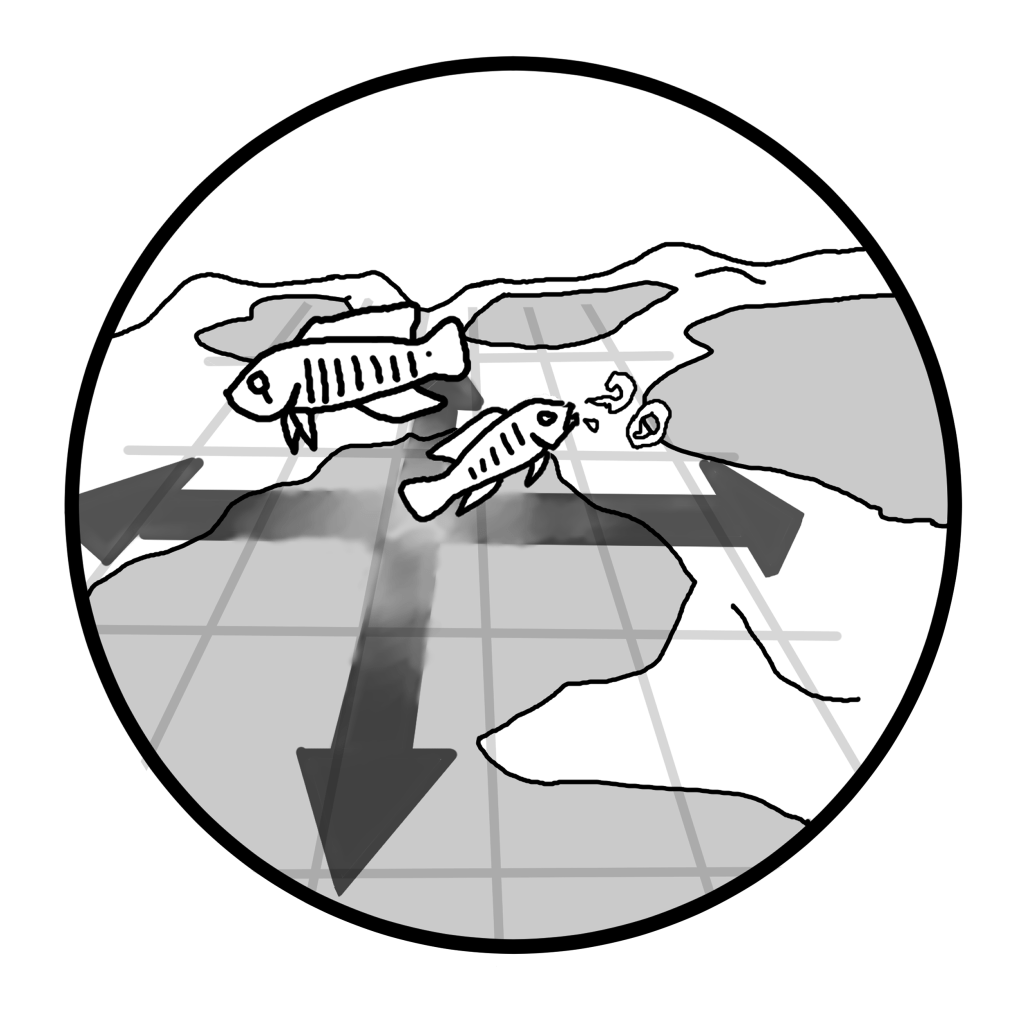
Social phenotypes in a niche-constructing shelldweller, Neolamprologus multifasciatus.
Here we combine study and experiment to determine the presence and structure of leadership in the shell-dwelling cichlid N. multifasciatus. We find groups led by a despotic male class, where influence is driven by need and mediated implicitly, proposedly by selective mimetism and social indifference. We characterise an unexpectedly punishment-driven mechanism where aggression is used by all individuals, which an inhibition finds to be causal to leadership success. such a model leads us to ask whether coercion might be more ubiquitous to animal decision-making than previously thought.
Multi-cultural: Evidence for culture in the social cichlid Neolamprologus multifasciatus
This emergening line of inquiry seeks to charcterise previously identified colony-specific behavioural topographies. Such behavioural states, consistent across years and spanning 100s of individuals, are reinforced by agonistic relations between neighbours, such bases compel our search for animal culture. A recent finding that asocial transplant pilots demonstrate no environmental contribution to such states, yields early promise that social contagion may underly diverging cultural states of niche-constructing in this species.
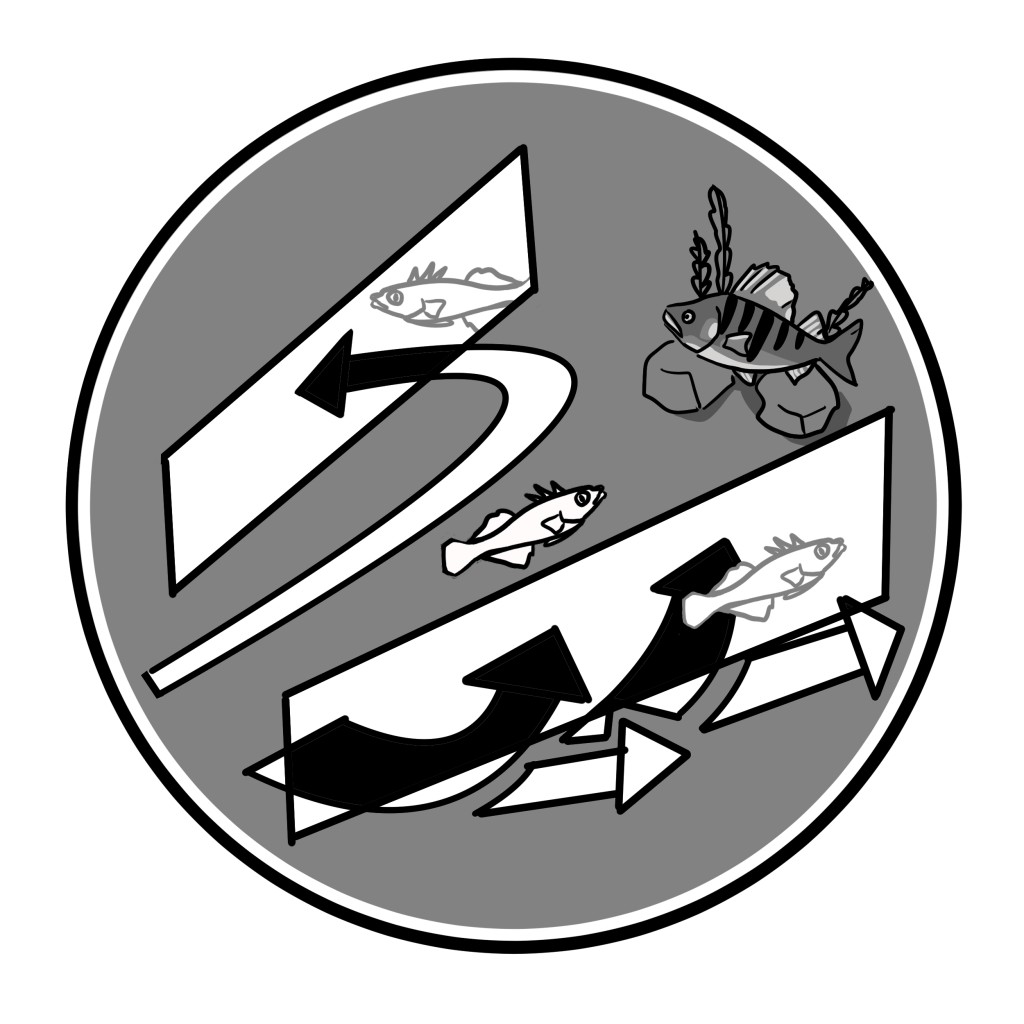
Cooperative strategies integral to predator inspection in three spined sticklebacks, Gasterosteus aculeatus
Here we revisit the study of predator inspection in sticklebacks, using motion tracking to breathe new life into an old paradigm. We demonstrate repeatability of early studies by Manfred Milinski and provide further evidence for cooperative strategies in the study species. Our results are robust against additional controls and suggest defection acts to inhibit approach, but cooperation may not act reversely.
Future avenues (contact for details and involvement):
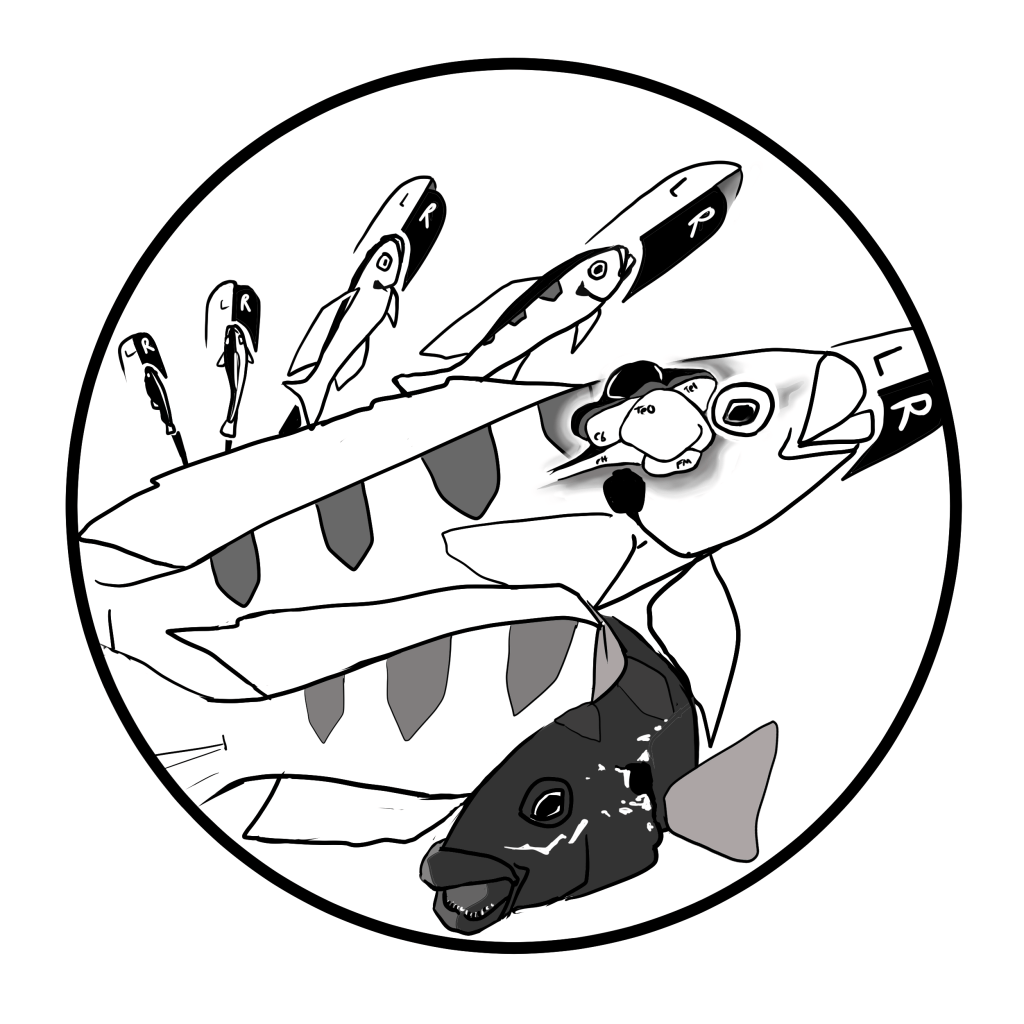
Staged developmental assymetries involve brain, body and behaviour in a scale-eating cichlid, Perissodus microlepis
Lateralised in their brains, bodies and behaviour, studies on adult and juvenile Perissodus microlepis have identified some ontogenetic windows for the asymmetric development. Initial slight asymmetries may be introduced or reinforced by mechanical input and even learning! Given the reciprocal components of brain structure and behaviour, and the demonstrated link between behaviour and mouth structure in Perissodus, the species presents untold opportunities to interrogate a multi-system ontogenetic network, particularly in asking how behavioural input may deliniate phenotype-led evolution
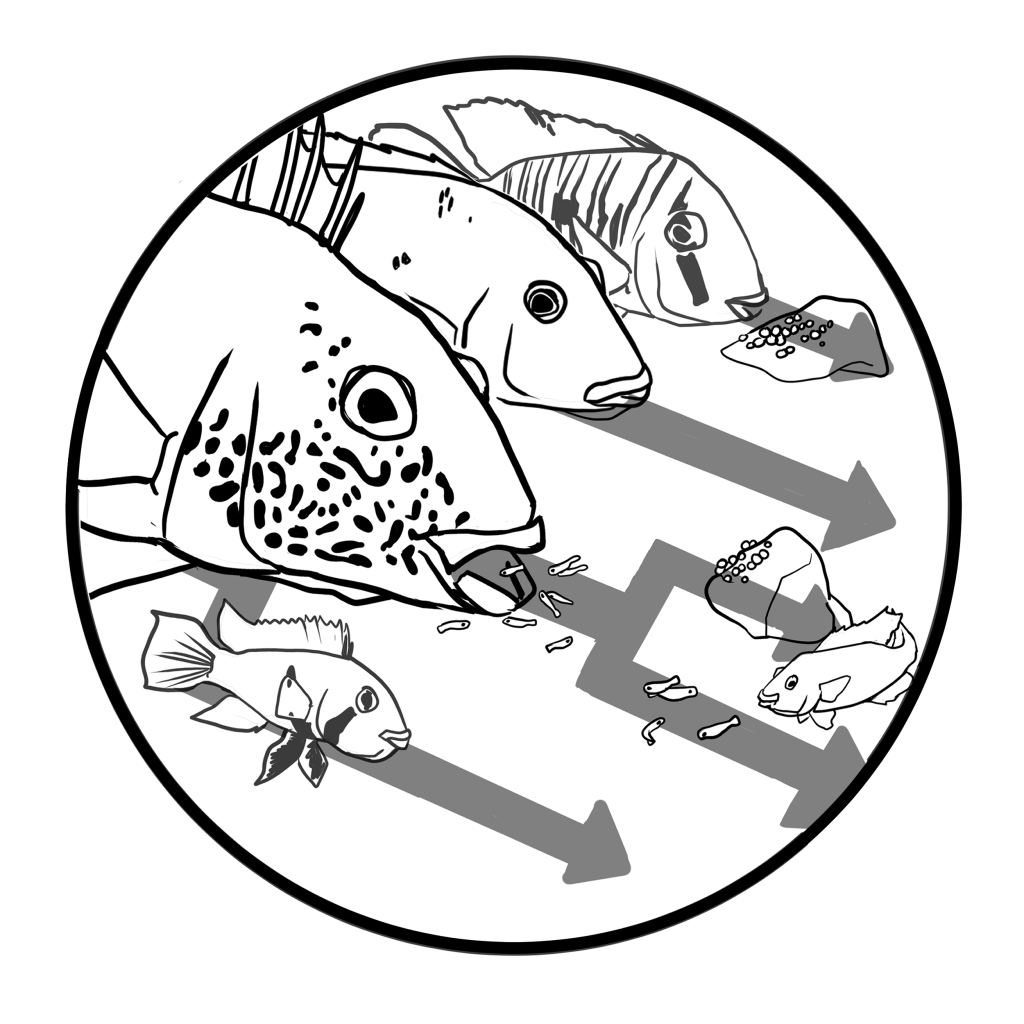
Convergent evolution of advanced brood-care strategies in a flock of South-American eartheaters
Few systems have the comparative power to truly dissect the ontogenetic interrelations of brain and behaviour. One exception may be found in the mouthbrooding Geophagine cichlids, for which maximum parsimony estimation yields 2-4 innovation events in parental care behaviour. We seek to use this speciose framework alongside immunohistochemistry techniques to describe patterns of convergence, homology and loss in both brain structure and activity, and in doing so articulate the link between vertebrate brain structure evolution and behavioural innovation.
 Boyd Dunster